The average organization uses well over 100 SaaS applications. Every single one comes with its own API, its own auth, its own data model, and its own quirks. If you're building a product that needs to integrate with your customers' tools, you already know the pain. Each integration is weeks of work, and maintaining them is a never-ending tax on your engineering team.
API aggregators exist to fix this. They give you a single interface to work with instead of dozens. But they're not all built the same, and the architectural differences really matter when you're betting your integration strategy on one.
This guide covers what API aggregators are, how they actually work, what benefits they deliver, and what to look for when you're evaluating one.
What is an API aggregator?
An API aggregator is a platform that combines multiple APIs within the same software category (accounting, CRM, HRIS, etc.) into a single, unified interface. Instead of building separate integrations for QuickBooks, Xero, Sage, NetSuite, and FreshBooks, you build once against the aggregator's API and get access to all of them through a normalized data model.
This concept is closely related to what's known as a unified API or universal API. The terms are often used interchangeably, but there's a subtle difference in how they show up in the wild. "API aggregator" is the more common label in financial services and open banking (think Plaid, Tink, or Truelayer), while "unified API" tends to describe aggregation across SaaS categories like accounting, CRM, and HRIS. The core principle is the same: one integration effort, many connections.
Here's what that looks like in practice. Without an API aggregator, connecting your product to five accounting platforms means learning five different authentication flows, five different data schemas, five different pagination styles, and five different error handling approaches. With an aggregator, you learn one.
The aggregator handles the translation layer. When you request a list of invoices through its API, it maps that request to the appropriate call for whichever accounting system your customer uses, whether that's a GET /invoices call to Xero's REST API or a query against QuickBooks' GraphQL endpoint, and returns the data in a consistent, normalized format.
How API aggregation works
Under the hood, an API aggregator handles several layers of complexity that you'd otherwise have to deal with yourself. For a deeper look at the integration patterns involved, see our guide on the benefits of API aggregation.
Authentication orchestration. Every third-party platform has its own OAuth flow, token refresh cadence, and scoping model. The aggregator manages all of this, storing credentials securely and handling token lifecycle so your application never has to. At Apideck, we built Vault specifically for this: a managed auth layer that handles OAuth flows and token refresh across all connectors automatically.
Data normalization. A "contact" in HubSpot looks nothing like a "contact" in Salesforce. Field names differ, data types vary, and relationships between objects are structured differently. The aggregator maps these platform-specific schemas to a common data model, so your application always receives data in the same shape. Where common models fall short, good aggregators offer custom field mapping to access provider-specific data without breaking the unified interface.
Request routing. When your application makes an API call, the aggregator figures out which downstream provider to call based on the customer's connected integration, translates the request into the provider's native format, executes the call, and returns the normalized response.
Error handling and rate limiting. Different APIs return errors differently and enforce rate limits on different timescales. The aggregator abstracts this away, providing consistent error responses and managing retries and backoff logic on your behalf.
Here's the thing most people miss, though. The critical architectural question is whether the aggregator caches your data or proxies it in real time. This distinction has huge implications for data freshness, security, and compliance. For handling large-scale data pipelines efficiently, scala web scraping enables real-time processing with improved performance and fault tolerance. More on this below.
Benefits of using an API aggregator
Ship integrations faster
The most immediate benefit is speed. Building a single integration against a unified API takes days or weeks. Building the same coverage with direct integrations takes months, sometimes longer. For SaaS companies competing for enterprise deals where integration requirements are table stakes, this time difference directly impacts revenue.
Reduce engineering maintenance
Integrations aren't a build-once-and-forget effort. Third-party APIs change, deprecate endpoints, modify authentication flows, and introduce new data fields. Each change requires your team to update and test the affected integration. An API aggregator shifts this maintenance burden to the platform provider, freeing your engineers to focus on features that actually differentiate your product.
Expand your addressable market
Different markets, regions, and customer segments use different software. European companies might use Exact Online or Sage for accounting while US companies prefer QuickBooks. A company in the Netherlands might run AFAS for HR while one in the US uses BambooHR. An API aggregator lets you support both without doubling your integration effort, making it easier to expand into new geographies and verticals.
Improve customer retention and expansion
Research consistently shows that integrations increase stickiness. Products that integrate deeply with a customer's existing workflow become harder to replace. Each integration you add creates another thread tying your product into their daily operations. Customers with active integrations also tend to upgrade to higher-tier plans and expand usage over time.
Strengthen your competitive position
In competitive evaluations, the breadth and quality of your integrations often tips the scale. Prospects check whether you support the specific tools in their stack. An API aggregator lets you cover more ground with fewer resources, which means you can match or exceed the integration coverage of competitors with much larger engineering teams. Presenting available integrations through a branded integrations marketplace makes this even more tangible for buyers.
What to look for in an API aggregator
Not all API aggregators are equivalent. These are the architectural and product decisions that actually matter.
Real-time data access vs. cached syncs
Some API aggregators cache your customers' data on their servers, syncing it periodically (often every 15 to 30 minutes, sometimes longer). This introduces data staleness and creates a real security liability: a third party is now storing your customers' sensitive financial, HR, or sales data.
The alternative is a real-time proxy architecture where API calls pass directly from the source to your application without being stored on intermediate servers. This means data is always current and you eliminate an entire category of compliance and security concerns. We wrote more about why this matters in our post on the power of real-time unified APIs.
For use cases like payments processing, lending decisions, payroll accounting, or any scenario where stale data creates risk, real-time access isn't a nice-to-have. It's a requirement.
Full CRUD support
Many aggregators focus primarily on reading data. But real product integrations need to write data back to source systems too. Creating invoices, updating contact records, syncing payment statuses: these write operations are essential for bidirectional workflows across use cases like accounts payable, accounts receivable, and expense management.
If your aggregator only reads data, you're going to hit a wall the moment your customers expect two-way sync.
Connector breadth and depth
The total number of connectors matters, but so does the depth of each one. A connector that only exposes a handful of endpoints from a platform with hundreds of resources is superficially useful at best. Evaluate the coverage of each connector against the specific endpoints and data objects your use cases require.
Pricing that scales with usage
Integration costs can balloon quickly with seat-based or tiered pricing models that charge for connectors whether your customers use them or not. We've written a detailed breakdown of unified API pricing models if you want to dig into the numbers.
Security and compliance posture
If your aggregator caches customer data, that creates an additional data store you need to account for in your SOC 2, GDPR, and other compliance frameworks. A no-storage architecture simplifies your compliance story significantly and reduces your attack surface.
Developer experience
The best API aggregator is one your engineers actually enjoy working with. Look for comprehensive documentation, SDKs in your language of choice, sandbox environments for testing, and clear API references. Open-source tooling and an active developer community are strong signals too.
API aggregator examples by category
API aggregators tend to specialize by software category or industry. Here's how the landscape breaks down.
Open banking and financial data aggregators
The term "API aggregator" has its roots in financial services. Open banking aggregators like Plaid, Tink, Truelayer, and Ibanity provide normalized access to consumer bank accounts, transactions, and financial data from banks and non-bank financial institutions. These platforms emerged in response to regulations like PSD2 in Europe, which required banks to open their data to licensed third parties.
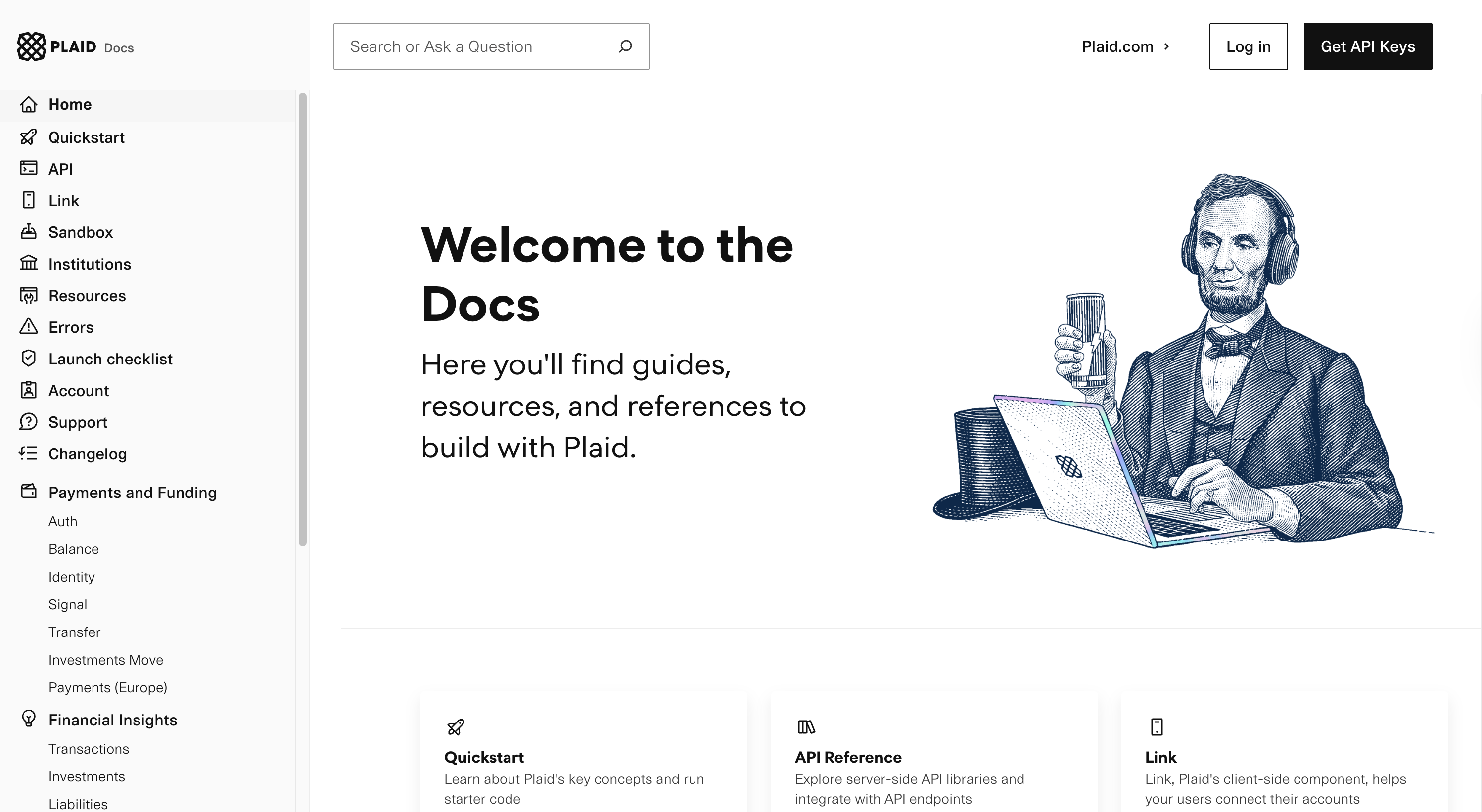
Regional players have also emerged across the globe. Lean Technologies covers the Middle East, Belvo serves Latin America, Mono and Okra focus on Africa, and BirAPI operates in Turkey. For a comprehensive directory of open banking aggregators worldwide, see the Open Banking Tracker API aggregator directory.
Accounting and ERP aggregators
This is one of the most complex categories for aggregation because accounting systems vary dramatically across regions, editions, and API maturity. A single vendor like Sage, for instance, encompasses dozens of distinct products with completely different APIs. Platforms like Apideck and Codat aggregate accounting APIs from QuickBooks, Xero, Sage, NetSuite, FreshBooks, MYOB, Exact Online, and others into a single Accounting API.
HRIS and payroll aggregators
Aggregators like Apideck, Finch, and Kombo connect to HR platforms including Workday, BambooHR, Gusto, Rippling, and HiBob through a unified HRIS API. These are essential for use cases like employee onboarding, payroll accounting, and identity verification.
CRM aggregators
Unified APIs for CRM aggregate platforms like Salesforce, HubSpot, Pipedrive, Zoho CRM, and Microsoft Dynamics through a single CRM API. These power use cases from lead enrichment to sales analytics.
Other categories
Specialized aggregators exist for travel (Duffel for airlines), energy (Enode for EVs and solar), construction (Agave), file storage, ATS, issue tracking, and more. The Unified APIs directory tracks the full landscape.
While some aggregators focus on a single category, multi-category platforms are increasingly important for SaaS companies whose integration needs span multiple software domains. Rather than stitching together multiple single-category aggregators, each with its own authentication, SDK, and billing, a single multi-category platform reduces operational complexity significantly.
API aggregator vs. embedded iPaaS
A common question when evaluating integration approaches is how API aggregators compare to embedded iPaaS (Integration Platform as a Service) solutions like Workato Embedded, Prismatic, or Paragon.
The key distinction is data normalization. An API aggregator standardizes data models across providers, so your application always receives data in the same shape regardless of which downstream system your customer uses. An embedded iPaaS gives you workflow tools to connect systems, but each integration still requires custom data mapping and configuration.
We've put together a detailed comparison in our engineer's guide to choosing between embedded iPaaS and unified APIs.
In practice, API aggregators are the better choice when you need many integrations within defined software categories with consistent data models. Embedded iPaaS tools make sense for complex, bespoke workflows that cross categories in unusual ways.
The future: API aggregators and AI agents
One of the most exciting emerging use cases for API aggregators is powering AI agents. As AI assistants become capable of taking actions across business systems (creating invoices, updating CRM records, syncing payroll data), they need reliable, structured access to those systems.
API aggregators built on open standards like OpenAPI are uniquely positioned for this. Protocols like the Model Context Protocol (MCP) allow AI agents to discover and interact with APIs programmatically. An aggregator that already normalizes data across hundreds of connectors gives an AI agent a consistent, predictable interface to work with, without needing to understand the quirks of each individual platform.
This isn't hypothetical. Apideck's unified APIs, built on OpenAPI specifications, are already being used to power AI-driven workflows across accounting, CRM, and HRIS systems. The same architecture that makes API aggregation useful for human developers turns out to be exactly what AI agents need too.
How Apideck approaches API aggregation
We built Apideck as a unified API platform with 200+ integrations across accounting, CRM, HRIS, file storage, ecommerce, ATS, and issue tracking. A few architectural decisions set us apart.
No data caching. We don't store your customers' data. API calls are processed in real time and passed directly from the source system to your application. This eliminates sync delays, reduces security risk, and simplifies compliance.
Full CRUD operations. Most connectors support bidirectional data flow. Not just reading data, but creating, updating, and deleting records in source systems.
Built on OpenAPI standards. Every connector is built on the OpenAPI specification, which enables automatic SDK generation, standardized documentation, and future-ready compatibility with emerging protocols like MCP for AI agents.
Developer-first tooling. Native SDKs, an interactive API Explorer, sandbox environments, comprehensive docs, and open-source building blocks make integration straightforward for engineering teams.
If you're building a SaaS product or fintech application and need reliable, real-time integrations with accounting platforms, HR systems, or CRMs, this is exactly the problem we solve.
Get started for free or explore the docs to see the platform in action.
Ready to get started?
Scale your integration strategy and deliver the integrations your customers need in record time.